
Abdominal Pain
Hardly anyone is unfamiliar with abdominal pain. Along with headaches, pain in the gastrointestinal tract is among the most common complaints. These can manifest in very different ways and have just as many different causes[1].
Often, however, they are accompanied by other symptoms such as nausea and/or vomiting, as well as fever and diarrhea/constipation[2, 3]. The causes are not always to be found in the abdominal cavity.
In our article, find out which symptoms suggest harmless abdominal complaints and which might possibly indicate organic diseases.

What is the difference between acute and chronic abdominal pain?
Acute abdominal pain occurs suddenly[3]. In many cases, these are not a cause for concern and disappear just as quickly as they appeared. Such as pinching discomfort after a heavy meal or an upset stomach after a particularly lavish meal. Psychological stress in particular can be a trigger for acute abdominal pain[4].
Chronic abdominal pain is defined as symptoms that persist for longer than 3 months[5]. Chronic abdominal pain can either be present constantly or recur after pain-free or low-pain phases.
From sudden to permanent
Whether sudden abdominal cramps or recurring complaints over a longer period: both harmless and serious causes can be triggers.
Primarily, abdominal pain signals that something is wrong with the digestive organs. Since there are other organs in the abdomen besides the stomach and intestinal tract that can also trigger pain, it is not always easy to categorize the complaints correctly.
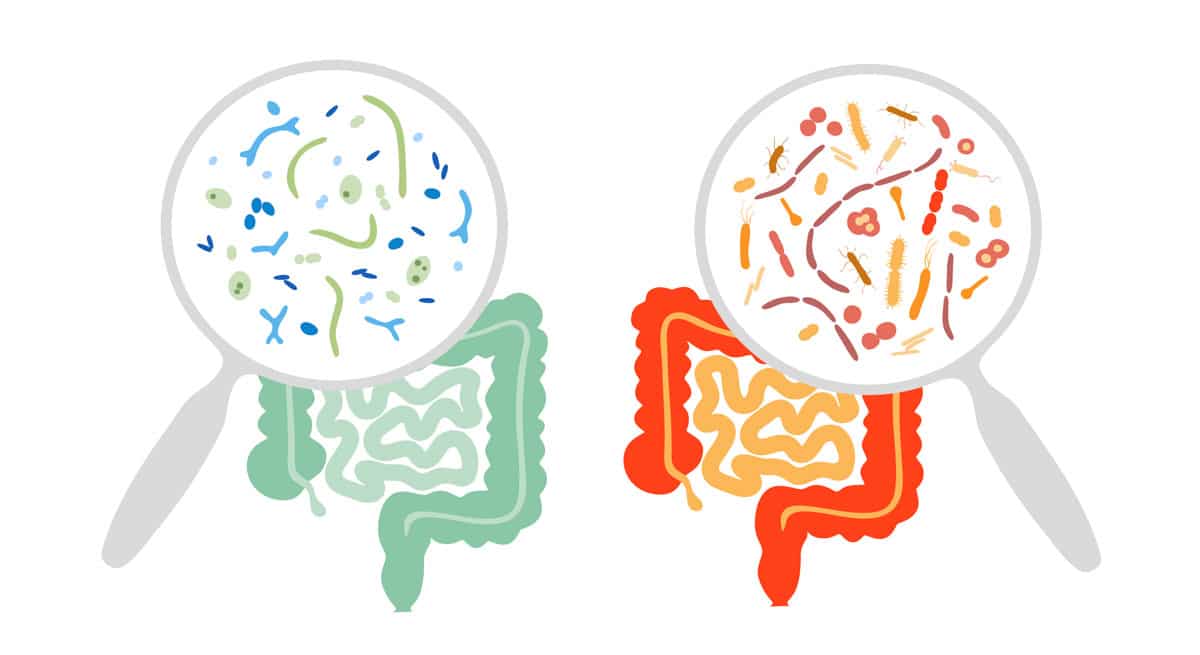
Symptoms and Causes
You probably know from your own experience that psychological factors such as stress, pressure, anxiety, or the feeling of being overwhelmed can be triggers for abdominal pain[4]. Due to inner restlessness, the muscles in the gastrointestinal tract cramp: abdominal cramps or bloating are the result. Sometimes loss of appetite occurs as a secondary side effect. To prevent it from getting that far, you should react to your symptoms in good time and, for example, rely on the antispasmodic effect of Roleca Juniper.
Abdominal pain without organic causes
If the complaints exist without an organic disease, they are referred to as functional abdominal pain[6]. Although this type is usually harmless, it can cause significant distress for those affected. Especially when it involves recurring pain. Typical for this type of abdominal complaint is that it occurs primarily during the day and at various locations in the abdomen. Those affected often describe it as diffuse pain.
Another characteristic of chronic functional abdominal pain is low-pain or pain-free periods[7]. Functional complaints are often triggered by bloating and can intensify with stress. Other symptoms without organic causes include:
- Feeling of fullness
- Diarrhea
- Constipation

Abdominal pain after eating
If symptoms become noticeable after eating, fatty foods and/or eating too hastily may be to blame[9, 10]. Lavish or insufficiently chewed food can only be digested slowly by the digestive organs and therefore remains longer in the stomach and intestines.
When the pace is out of sync
The slowed digestive process promotes the formation of gases, which in turn can lead to bloating, a feeling of fullness, and abdominal pain. If you continue to suffer from abdominal pain after eating despite careful chewing, you should consult a doctor. A food intolerance[12] or gastritis[13] could potentially be behind it.
Distinction between
organic diseases and functional digestive complaints
| Organic diseases | Functional digestive complaints | |
|---|---|---|
| Duration of symptoms | Short | Long |
| Development of symptoms | Progressive | Symptom-free or low-symptom intervals |
| Other physical symptoms | None | Yes, varying degrees |
| Other psychological symptoms | Rare | Frequent, varying symptoms |
| Stress dependency | Low | Significant |
| Pain localization | Localized | Diffuse, changing |

When to see a doctor?
If abdominal pain persists for more than a week, you should visit your doctor to clarify whether an underlying disease might be the cause. Acute, colicky pain that becomes increasingly severe over time is also often a sign of a medical emergency. For the following symptoms, you should not hesitate but seek immediate medical help:
- High fever
- Bloated abdomen
- Nocturnal abdominal pain
- Difficulty swallowing
- Blood in stool, urine, or vomit


Home remedies and tips for abdominal pain without organic disease
Some types of abdominal pain can be treated by yourself without a doctor or medication. For mild gastrointestinal infections or complaints after a lavish meal, for example, home remedies such as a hot water bottle prove to be very helpful.
Changing a hectic lifestyle through autogenic training or moderate exercise such as yoga can also contribute[14] to reducing abdominal pain or preventing it from occurring in the first place.
- Heat provides relaxation
A hot water bottle, a heated cherry stone pillow, or a hot bath with lavender or yarrow are time-tested remedies for abdominal cramps, as the muscles are relaxed and symptoms are relieved. - Abdominal wraps and compresses
Hot, moist compresses with brewed chamomile flowers or chamomile tea, or warm abdominal wraps with boiled potatoes, help with abdominal cramps (menstrual cramps) and bloating. - Medicinal herbal teas for abdominal pain
Medicinal herbal teas also help with bloating and gastrointestinal complaints. Teas with fennel, caraway, anise, chamomile, peppermint, ginger, or lemon balm are particularly suitable. - Prefer mild, high-fiber foods & unsweetened drinks
Slowly chewed food that is not too salty or heavily spiced is digested better and more healthily. It is better to eat several smaller meals a day than one or two lavish ones[10]. - Avoid alcohol, coffee, and cigarettes
Stimulants of this kind can further intensify abdominal pain as they irritate the stomach. - Abdominal massage
Massaging the abdomen with lavender, thyme, or St. John’s wort oil can also help relieve pain. Gentle, circular movements are performed with the flat of the hand around the navel in a clockwise direction.

Juniper – known for generations
Juniper has a positive effect on the gastrointestinal tract not only as a spice in food. The oil from juniper berries is also ideally suited to support and improve digestion or to relieve abdominal cramps[15, 16].

What Roleca Juniper can do for your well-being:
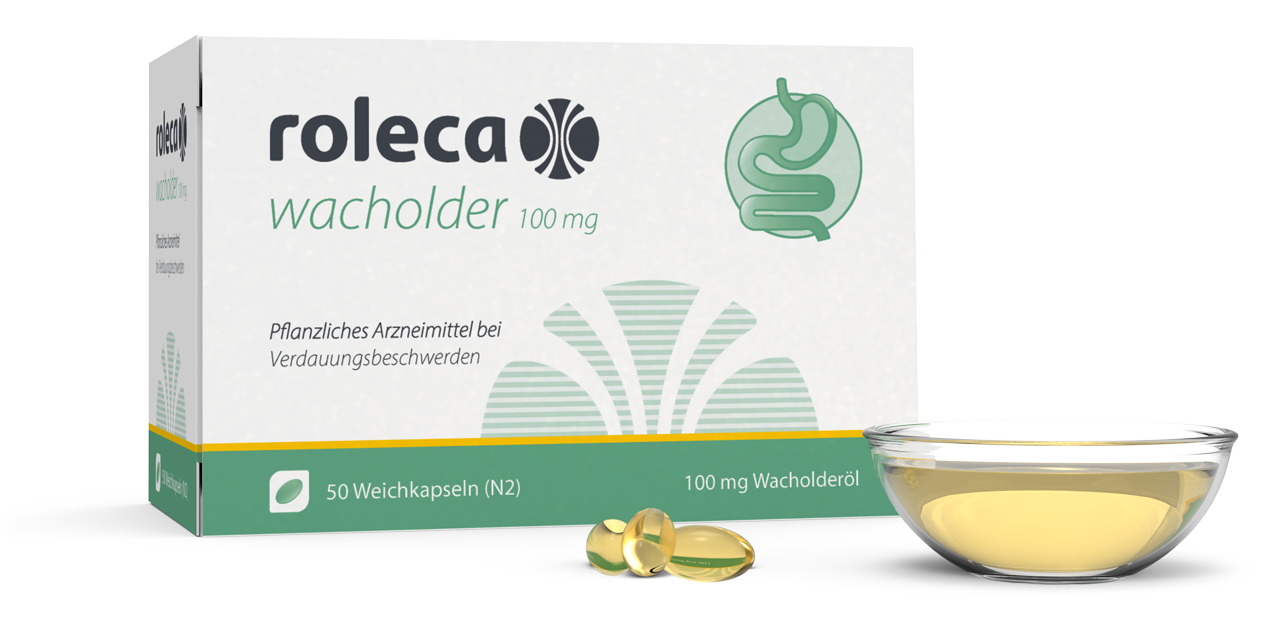
We at Roleca Pharma also utilize the healing power of juniper berries. As the only juniper oil medicine in Germany, we have specifically developed Roleca Juniper for the relief of digestive complaints.
This is a purely herbal product that is effective with a dose of just one capsule per day. The medicine can be taken for both acute and chronic abdominal pain. Roleca Juniper is particularly recommended for abdominal cramps, bloating, and a feeling of fullness due to its antispasmodic effect.
Find more about Roleca® Juniper here.
You can order Roleca® products directly online here!
Juniper oil for
digestive complaints
Bibliography
- Christopher R Macaluso & Robert M McNamara (2012) Evaluation and management of acute abdominal pain in the emergency department, International Journal of General Medicine, 5:, 789-797, DOI: 10.2147/IJGM.S25936
- Reust CE, Williams A. Recurrent Abdominal Pain in Children. Am Fam Physician. 2018 Jun 15;97(12):785-793. PMID: 30216016.
- https://www.ncbi.nlm.nih.gov/books/NBK459328/
- Lexne, Erik (2021). Psychiatric aspects on acute abdominal pain, Linnaeus University Dissertations No 423/2021, ISBN: 978-91-89460-13-3 (print), 978-91-89460-14-0 (pdf).
- Berger, T., Damschen, U. (2009). Chronische Bauchschmerzen. In: Zernikow, B. (eds) Schmerztherapie bei Kindern, Jugendlichen und jungen Erwachsenen. Springer, Berlin, Heidelberg. https://doi.org/10.1007/978-3-540-74065-0_18
- Müller-Lissner S, Andresen V, Corsetti M, Bustos Fernández L, Forestier S, Pace F, Valdovinos MA. Functional Abdominal Cramping Pain: Expert Practical Guidance. J Clin Gastroenterol. 2022 Nov-Dec 01;56(10):844-852. https://doi.org/10.1097/MCG.0000000000001764. Epub 2022 Sep 23. PMID: 36149666; PMCID: PMC9553264.
- Ray E. Clouse, Emeran A. Mayer, Qasim Aziz, Douglas A. Drossman, Dan L. Dumitrascu, Hubert Mönnikes, Bruce D. Naliboff, Functional Abdominal Pain Syndrome, Gastroenterology, Volume 130, Issue 5, 2006, Pages 1492-1497, ISSN 0016-5085, https://doi.org/10.1053/j.gastro.2005.11.062.
- Thapar, N., Benninga, M.A., Crowell, M.D. et al. Paediatric functional abdominal pain disorders. Nat Rev Dis Primers 6, 89 (2020). https://doi.org/10.1038/s41572-020-00222-5
- Colomier, E., Melchior, C., Algera, J.P. et al. Global prevalence and burden of meal-related abdominal pain. BMC Med 20, 71 (2022). https://doi.org/10.1186/s12916-022-02259-7
- Wilkinson JM, Cozine EW, Loftus CG. Gas, Bloating, and Belching: Approach to Evaluation and Management. Am Fam Physician. 2019 Mar 1;99(5):301-309. PMID: 30811160.
- Abhishek Kumar, Nabeel Almotairy, Juliana Jomaa Merzo, Karin Wendin, Elisabet Rothenberg, Anastasios Grigoriadis, Gunilla Sandborgh-Englund & Mats Trulsson (2022) Chewing and its influence on swallowing, gastrointestinal and nutrition-related factors: a systematic review, Critical Reviews in Food Science and Nutrition, DOI: 10.1080/10408398.2022.2098245.
- Gjini B, Melchior I, Euler P, Kreysel C, Kalde S, Krummen B, Kiesslich R, Hemmerlein B, Frieling T. Food intolerance in patients with functional abdominal pain: Evaluation through endoscopic confocal laser endomicroscopy. Endosc Int Open. 2023 Jan 13;11(1):E67-E71. doi: 10.1055/a-1978-6753. PMID: 36644536; PMCID: PMC9839425.
- Timothy Gibson, Chapter 26 – Abdominal Pain, Editor(s): Lisa B. Zaoutis, Vincent W. Chiang, Comprehensive Pediatric Hospital Medicine, Mosby, 2007, Pages 120-124, ISBN 9780323030045, https://doi.org/10.1016/B978-032303004-5.50030-2.
- Högström S, Philipson A, Ekstav L, Eriksson M, Fagerberg UL, Falk E, Möller M, Sandberg E, Särnblad S, Duberg A. Dance and yoga reduced functional abdominal pain in young girls: A randomized controlled trial. Eur J Pain. 2022 Feb;26(2):336-348. doi: 10.1002/ejp.1862. Epub 2021 Sep 21. PMID: 34529293.
- Majewska E, Kozłowska M, Kowalska D, Gruczyńska E. Characterization of the essential oil from cone-berries of Juniperus communis L. (Cupressaceae). Herba Pol. September 26, 2017;63(3):48–55.
- Majewska E, Kozłowska M, Kowalska D, Gruczyńska E. Characterization of the essential oil from cone-berries of Juniperus communis L. (Cupressaceae). Herba Pol. September 26, 2017;63(3):48–55.
Learn more about the following topics

This post is also available in:
Kontakt

Roleca Pharma GmbH
Georgstraße 38
D-30159 Hannover
T: +49 511 5151 680
info@roleca.com
Melden Sie sich zu unserem Newsletter an, um auf dem Laufenden zu bleiben

