
Dyspepsia – Symptoms, Causes & Herbal Treatment
Dyspepsia describes a symptom complex involving upper abdominal discomfort, such as sensation of fullness, nausea, heartburn, abdominal pain, belching, or bloating.
It is a common symptom complex, affecting approximately 10-20% of people worldwide.

Why the Symptoms Occur
First, one must differentiate between the underlying causes of the symptoms: Organic dyspepsia, on the other hand, usually has a clearly identifiable cause, such as food intolerances that can cause symptoms, as do gallbladder diseases or gastrointestinal ulcers. Gastroesophageal reflux disease (GERD), where stomach acid flows back into the esophagus, can also cause dyspepsia symptoms. In particular, inflammation of the stomach lining can also be a cause of the symptom complex.
However, a large proportion of cases have no organic causes, which is then referred to as “functional dyspepsia.”

Common Symptoms of Dyspepsia
Symptoms can vary greatly from person to person. The most common symptoms include:
Pain or Pressure in the Upper Abdomen
Affected individuals often complain of an unpleasant or painful sensation in the upper abdomen. This pain can be dull or sharp and may persist for an extended period. In some cases, the pain intensifies when the stomach is empty or when certain foods are consumed.
Bloating & Sensation of Fullness
Individuals affected by dyspepsia often also suffer from bloating and/or a sensation of fullness. The stomach feels full and distended, even after consuming only a small amount of food. This symptom can also be accompanied by constipation or slow digestion.

Heartburn
Heartburn or pain behind the breastbone (in the chest area) are also common symptom complexes of dyspepsia. This involves a burning or stinging sensation in the chest, often accompanied by upper abdominal pain.
Belching
Another common symptom of dyspepsia is belching or a sour taste in the mouth. This is usually caused by acid accumulation in the stomach and reflux into the esophagus.
Treatment Decision
When deciding on treatment for dyspepsia, various factors must be considered to ensure an individually tailored and effective approach.
The treatment of dyspepsia depends on the underlying cause. For organic dyspepsia, treating the triggering disease is paramount, while for functional dyspepsia, symptomatic measures are primarily applied.

Options for Symptom Management:
Lifestyle Changes:
Stress reduction, a balanced diet, regular exercise, and avoidance of alcohol and nicotine can alleviate symptoms.
Conventional Medicines:
Proton pump inhibitors, antacids, H2 blockers, and prokinetics are some of the conventional medications for treating dyspepsia.
Herbal Medicines:
Herbal remedies, such as juniper oil in capsules, can help alleviate symptoms.


How Juniper Oil Can Be Used for Dyspepsia
Juniper oil is extracted from the berries of the juniper bush (Juniperus communis) and has been known in medicine for centuries. It has various mechanisms of action that can be helpful for dyspeptic symptoms.
Taken in capsules, juniper oil can be an interesting and promising treatment method for dyspepsia.

How Juniper Oil Works
- Antispasmodic effect: Juniper oil relaxes the smooth muscles of the gastrointestinal tract and can thereby relieve cramp-like pain and discomfort.
- Digestive-promoting effect: Juniper oil stimulates the production of digestive enzymes and gastric juice, allowing food to be digested more efficiently. This can be particularly helpful in functional dyspepsia, where there is impaired digestive function without an identifiable organic cause.
- Anti-inflammatory effect: Juniper oil possesses anti-inflammatory properties that can help reduce inflammation in the gastrointestinal tract. This is particularly beneficial in organic dyspepsia caused by inflammation or infections.
- Antimicrobial effect: Juniper oil has proven antimicrobial properties that are effective against various bacteria, viruses, and fungi. This can be particularly helpful in dyspepsia triggered by infections.

What Roleca Juniper can do for your well-being:
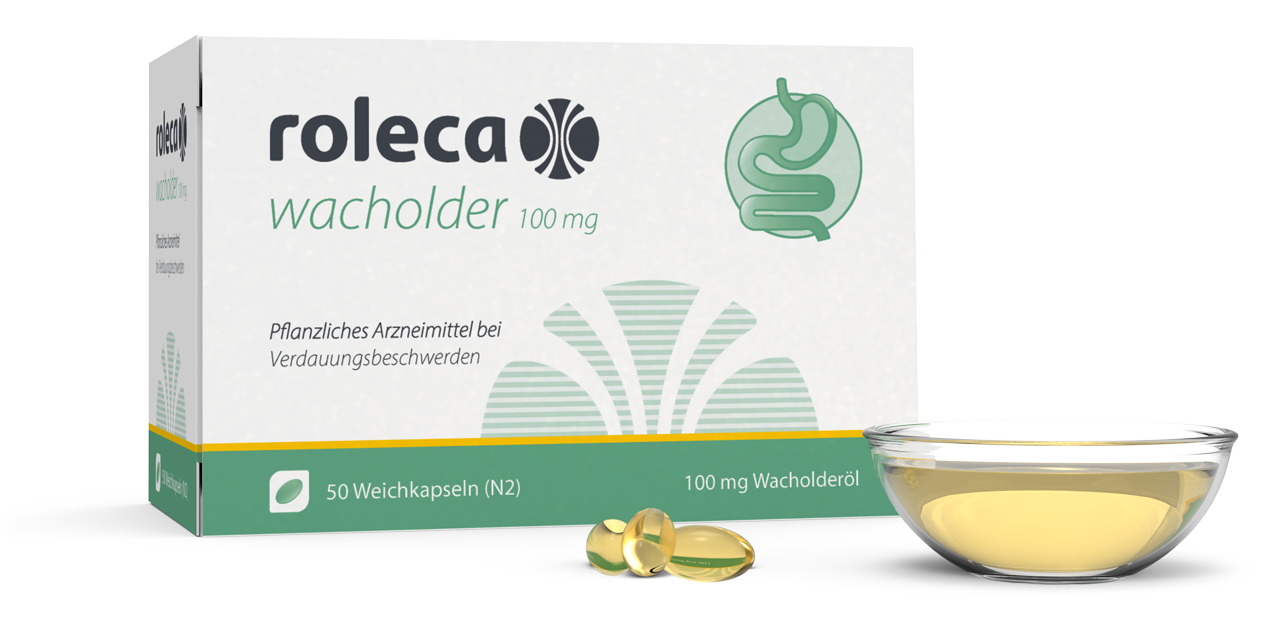
We at Roleca Pharma also harness the healing power of juniper berries. As the only juniper oil medicine in Germany, we have specifically developed Roleca Juniper to relieve gastrointestinal discomfort.
It is a purely herbal product that works with just one capsule per day. The medicine can be taken for both acute and chronic abdominal pain. Especially due to its antispasmodic effect, Roleca Juniper is recommended for dyspeptic symptoms such as abdominal cramps, heartburn, and sensation of fullness.
Find out more about Roleca® Juniper here.
You can order Roleca® products directly online here!
Juniper oil for
digestive complaints
Learn more about the following topics


This post is also available in:
Kontakt

Roleca Pharma GmbH
Georgstraße 38
D-30159 Hannover
T: +49 511 5151 680
info@roleca.com
Melden Sie sich zu unserem Newsletter an, um auf dem Laufenden zu bleiben

