
Imbalances in the Gastrointestinal Tract
Imbalances in the gastrointestinal tract are always associated with a feeling of restricted well-being. There is hardly an adult who is unfamiliar with such feelings. Once the gastrointestinal tract is out of balance, the primary focus for affected patients is a quick, effective relief of symptoms.
Symptoms often make a reliable diagnosis difficult
The causes and symptoms can be manifold. Many people have even grown accustomed to a permanent state of imbalance in the gastrointestinal tract, attributing it to aging or work-related or private stress.

Digestive Complaints: A Common Ailment
According to a survey by the opinion research company Forsa on behalf of the Federal Union of German Associations of Pharmacists (ABDA), imbalances in the gastrointestinal area are widespread. 7 out of 10 respondents stated that they had suffered from digestive complaints in the last 12 months. Furthermore, the survey showed that the suffering of many affected individuals with gastrointestinal imbalances is enormously high.
Learn more about the two most common causes of imbalances in the gastrointestinal tract below:

Nutrition-Related Imbalances
A healthy gut is the foundation of your physical and mental health
Did you know that our gastrointestinal tract has to digest about 45 tons of food over a lifetime? With this knowledge in mind, you should pay even closer attention to “signals from the gut” to avoid falling out of physical and psychological balance.
Fast Food and Hectic Lifestyles
Unhealthy, low-fiber meals consumed hectically, insufficient fluid intake, and/or too little exercise. These are facts that are part of many people’s daily lives and, for many, literally “hit them in the stomach.”

Food intolerances are a common reason for imbalances
Poor gut health manifests itself in various symptoms that are often not clear. If, for example, intolerances to lactose, protein, or histamines are present, the gut quickly becomes irritated or can even become inflamed.
First signs of an imbalance due to food intolerances can be bloating, constipation, or diarrhea.
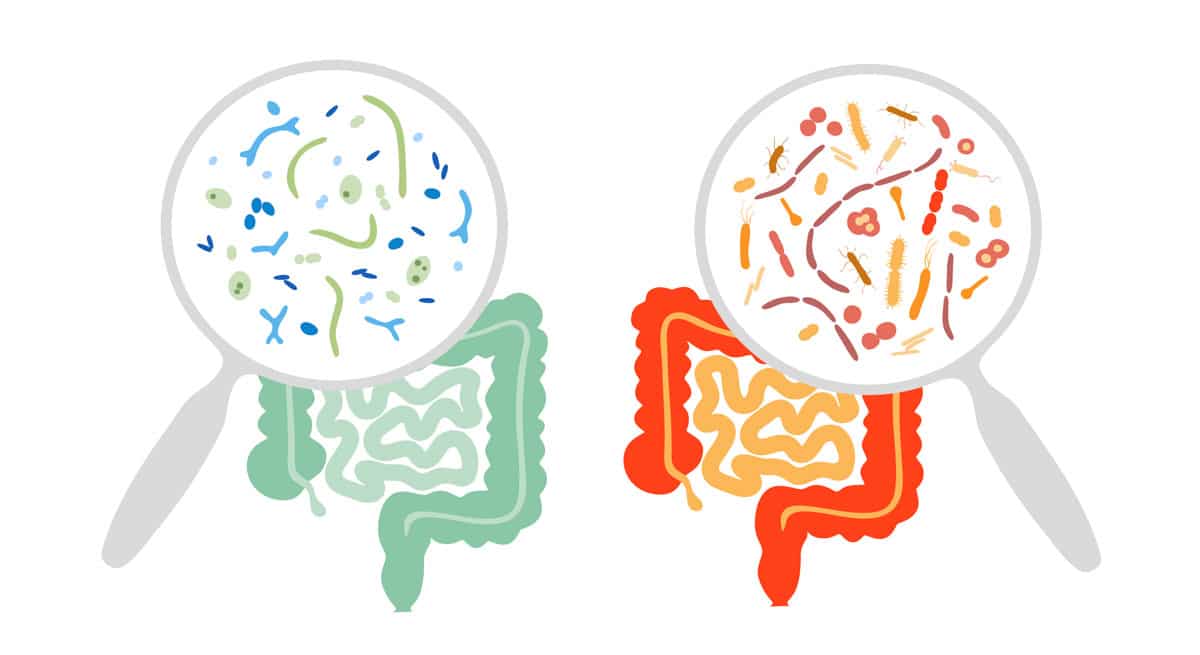
Certain bacteria can cause inflammation
Another disturbance of the intestinal flora can occur, for example, with colonization by the Helicobacter bacterium, the so-called Helicobacter pylori.
This bacterium nests in the stomach lining and is the most common cause of gastritis. It is an infection that can be effectively treated with medication to subsequently prevent the development of gastrointestinal ulcers.
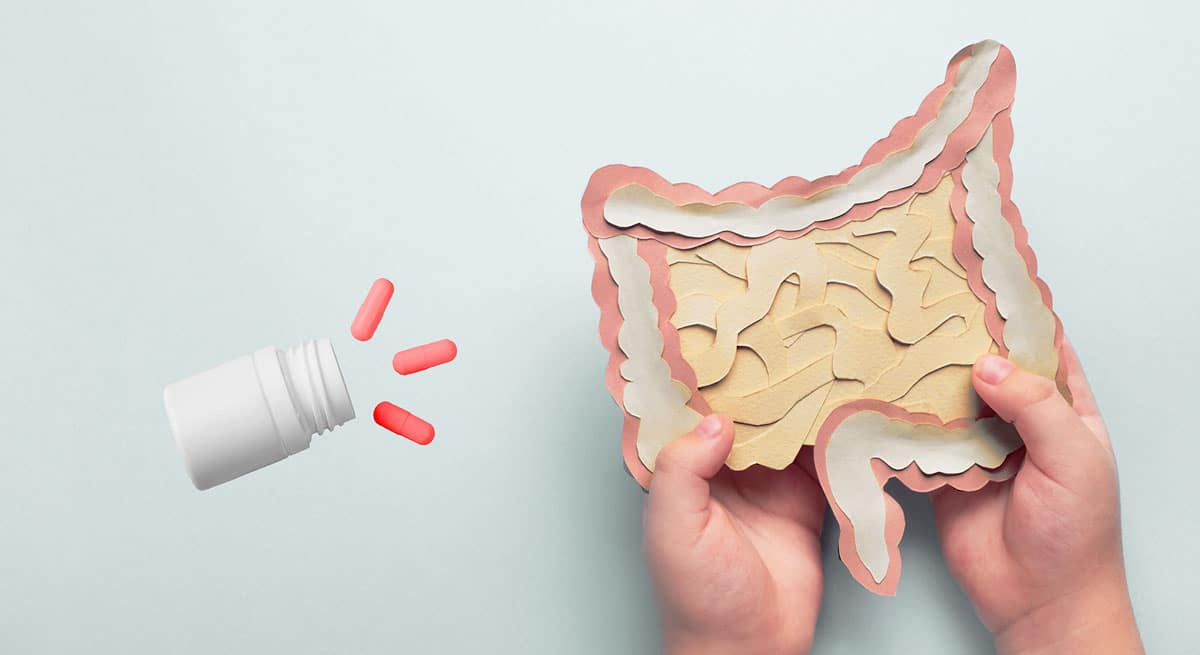
Antibiotics can also disturb the natural balance of the intestinal flora
Our up to 100 trillion intestinal bacteria of various types help stimulate bowel movements and strengthen the immune system. However, if a bacterial infection occurs, antibiotics are often prescribed. They are intended to combat harmful bacteria to contain the infection. But antibiotics do not distinguish between beneficial and harmful bacteria, and thus beneficial intestinal bacteria are often killed as well, resulting in an altered intestinal flora and potential discomfort.

Psychologically Induced Imbalances in the Gastrointestinal Tract
Our gastrointestinal tract not only harbors numerous intestinal bacteria but also possesses a spectacular network of about 100 million nerve cells. This completely autonomous nervous system is also known as the “gut brain.”
Via the gut-brain axis, the nervous system of our digestive tract communicates with our brain and is part of the autonomic nervous system.
Since we cannot consciously control vital basic functions such as our breathing, metabolism, and digestion, the autonomic nervous system is also referred to as autonomous. It acts as a mediator between the central nervous system and the organs and bodily functions.
Prolonged Stress and Chronic Complaints
Everyday stress, and especially prolonged stress, very often affects our intestinal flora. According to scientific studies, stress leads to an imbalance between “good” and “harmful” pathogens in the gut. The consequence of a stress-induced imbalance in the intestinal flora can be diarrhea, for example.
In addition to recommendations for a life as stress-free as possible, the long-proven active ingredients of the Roleca® Pharma range can also provide rapid relief for your digestive complaints.
How does this interaction affect imbalances in the gastrointestinal tract?
Our intestinal bacteria influence the psyche through signals from the enteric nervous system. For example, digestive processes are reduced in stressful situations. The center of our emotions lies in our core. That’s why exciting situations and bad news can quickly “hit us in the stomach” or need to be “digested first.”
This is the responsibility of the “sympathetic” nerve, which is activated during physical exertion and in stressful situations. It puts our body in a state of fight or flight. The consequences can be acute gastrointestinal complaints.
In contrast, the “parasympathetic” nerve is responsible for maintaining the body’s internal balance. As the “rest-and-digest nerve,” it activates bowel movements and stimulates the cells of the intestinal wall responsible for nutrient absorption.
Our Top 10 Tips to Balance Your Gastrointestinal Tract:
Tip No. 1
Tip No. 1: Drink at least 1.5 to 2 liters of water or unsweetened tea per day. Easy to remember: one full glass of water (200 ml) per hour!
Tip No. 2
Tip No. 3:
Tip No. 4:
Tip No. 5:
Tip No. 6:
Tip No. 7:
Tip No. 8:
Tip No. 9:
Tip No. 10:
Are you suffering from imbalances in your gastrointestinal tract?
We are happy to take care of your digestion and gut health. Dedicate your thoughts again to the beautiful things in life and stay healthy! Here you will find common symptoms and causes and which medicines and medical devices can help you.
You can order Roleca® products directly online here!
Learn more about the following topics


This post is also available in:
Kontakt

Roleca Pharma GmbH
Georgstraße 38
D-30159 Hannover
T: +49 511 5151 680
info@roleca.com
Melden Sie sich zu unserem Newsletter an, um auf dem Laufenden zu bleiben

