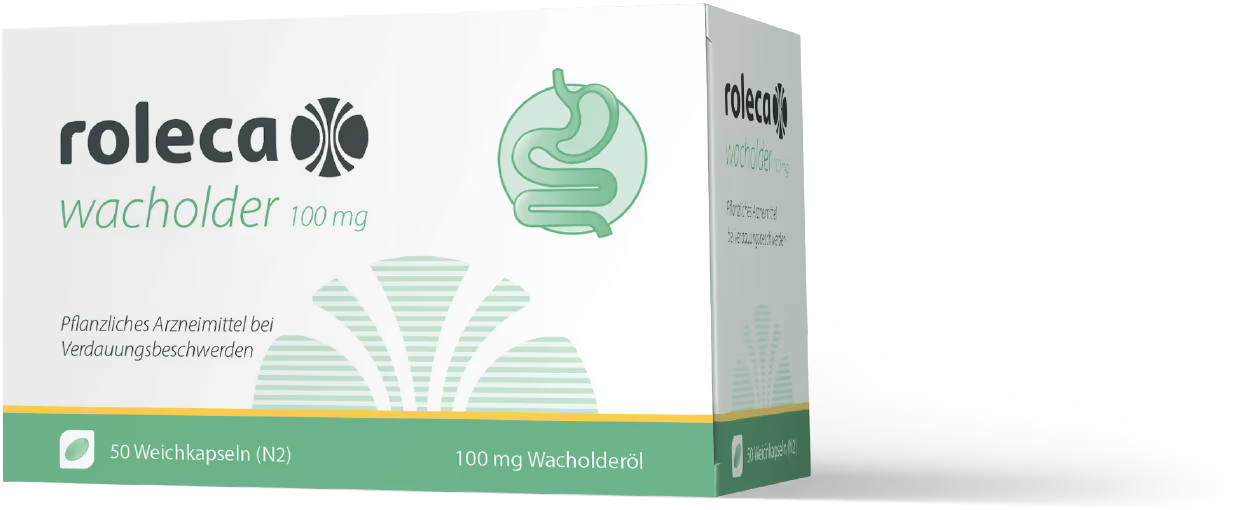
How juniper berry oil works for digestive complaints
Gas, a feeling of fullness, and mild abdominal cramps occur when the gastrointestinal muscles cramp and gases can no longer be transported onward unhindered. This is exactly where juniper berry oil comes in: the monoterpenes it contains—primarily α-pinene, myrcene, and sabinene—have an antispasmodic effect on the smooth muscles of the digestive tract. At the same time, they stimulate the production of digestive juices and promote natural bowel movement. Through this combination of relaxation and stimulation, the food mass can move better, trapped gases are released, and the feeling of pressure and fullness subsides.
The soft capsule of ROLECA® Juniper is designed to dissolve in the gastrointestinal tract after about 30 minutes, releasing the oil exactly where it is needed.
High-dose oil instead of tea or individual berries
Juniper berries contain only 0.8 to 2 percent essential oil. Those who chew berries—a maximum of 10 per day—therefore only absorb a fraction of the amount of active ingredient contained in one capsule of ROLECA® Juniper. When brewed as a tea, part of the essential oils also evaporates with the hot water. ROLECA® Juniper contains 100 mg of pure, standardized juniper berry oil per capsule—a precisely defined amount of active ingredient that is tested for every batch according to the specifications of the European Pharmacopoeia. One capsule daily is sufficient.
Medicinal product instead of dietary supplement: Why the difference matters
Juniper capsules are also available as dietary supplements—often cheaper, but without an approval process. The difference: dietary supplements are subject to food law and may not claim to be effective against diseases. There is no obligation to test the content batch by batch—the actual amount can deviate by 50 percent or more from the information on the package, according to the Bavarian State Office for Health and Food Safety. Furthermore, pharmaceutical-grade juniper berry oil is not used here. ROLECA® Juniper is a medicinal product approved by the BfArM: tested pharmaceutical quality, standardized active ingredient content, and an approved indication for dyspeptic symptoms.
Clinically studied
The efficacy of ROLECA® Juniper for functional digestive complaints was investigated in a randomized, controlled clinical trial (Albrecht et al., Phytomedicine, 2025). The study confirms the antispasmodic and digestive effects of juniper berry oil. Additionally, the application is supported by the HMPC monograph of the European Committee on Herbal Medicinal Products, which recommends juniper berry oil for the treatment of dyspeptic symptoms.
What triggers digestive complaints
Gas, a feeling of fullness, and gastric pressure rarely occur without a reason. Often, a combination of diet and lifestyle is behind it. An overview of the most important triggers:
High-fat and hard-to-digest meals
Schnitzel with fries, cream sauces, or lavish feasts place heavy demands on the gastrointestinal tract. When digesting fat, the stomach and pancreas work at full speed—the result is often an unpleasant feeling of pressure in the upper abdomen that can last for hours.
Gas-producing foods
Legumes such as beans and lentils, cabbage vegetables, onions, but also whole grain products and unripe fruit contain fiber and indigestible carbohydrates that are broken down by intestinal bacteria with significant gas formation. The higher the fiber content, the more gas is produced.
Eating in a hurry and stress
Those who eat under time pressure chew less thoroughly and swallow more air—known in technical terms as aerophagia. The swallowed air reaches the intestines and intensifies the feeling of bloating there. Stress also acts directly on the intestinal nerves: the so-called gut-brain axis ensures that psychological tension slows down or cramps intestinal movement.
Carbonated beverages
Sparkling water, sodas, and beer bring additional gas into the digestive tract. In combination with an already sensitive digestion, this can significantly increase gas.
Food intolerances
Lactose, fructose, or gluten intolerances lead to certain food components not being broken down correctly. Intestinal bacteria ferment the undigested remains and produce excess gases in the process. If suspected, medical clarification is recommended.
In many cases, no single cause can be identified—doctors then speak of functional digestive complaints or functional dyspepsia. An estimated 10 to 20 percent of the population is affected. Herbal medicinal products such as ROLECA® Juniper with antispasmodic and digestive properties are frequently used in such cases as a first measure in self-medication.